

Priorities of the European Parliament VS Priorities of the European Societies : Do they align?
Eighteenth July last year (2024) was a decisive day for the future of European countries – in Strasbourg the Political Guidelines For the Next European Commission 2024−2029 were released by the European Commission. Now, over a year after the set priorities have been verified by Eurobarometer 103.4. The international project, who regularly verifies public opinions, this time conveyed a survey among European citizens asking to select 3 topics, which in their opinion should be considered priority in European policy.
What are the priorities of the European Agenda and European Commission?
The last decade has been challenging for the EU, marked by crises ranging from accelerating climate change to the COVID-19 pandemic and Russia’s war of aggression against Ukraine. Those events created the necessity of deciding on the direction in which the EU will develop in the next few years. While the European Strategic Agenda points the direction of the European Union towards democracy, safety and prosperity, the European commission extends those slogans into 7 specific and practical goals that need to be fulfilled.
The main priority of the European Strategic Agenda is ensuring a free and democratic Europe. Under the pressures of rising extremist movements and radicalization of social opinions, upholding European values and living up to them, became the most vital in the opinion of European deputies. The European Commission suggests achieving this aim through defending democracy and strengthening rules of laws. The goal also drafts the enhancement of communication between the European Commission and the European Parliament to optimize the directory processes and increase transparency.
Followingly, the second priority set by European deputies is building a strong and secure Europe. Russia’s invasion of Ukraine, together with the global impact of the COVID-19 crisis, has placed security at the centre of the political agenda. Decisions have been made to ensure citizens safety through the focus on defense, protecting EU citizens, developing the EU into a bigger, stronger and more resilient union. Those objectives are planned to be achieved through continuing the European migration policies, strengthening the border management and addressing the cybersecurity and hybrid threats. Security policy also extends in the food industry sector to ensure food, water and nature security for the well-being of EU citizens and the positive impact on the environment.
The third point of the European Strategic Agenda is improvement of European prosperity and competitiveness. The leaders plan to make the European Union the world leader in the green and digital transformations that supports research, innovation, and investment, while enabling the development of high-quality jobs. The European Commission highlights that delivering EU funds and reducing administrative paperworks are key elements of this transformation, aiming to help European industries remain competitive on the global scale.
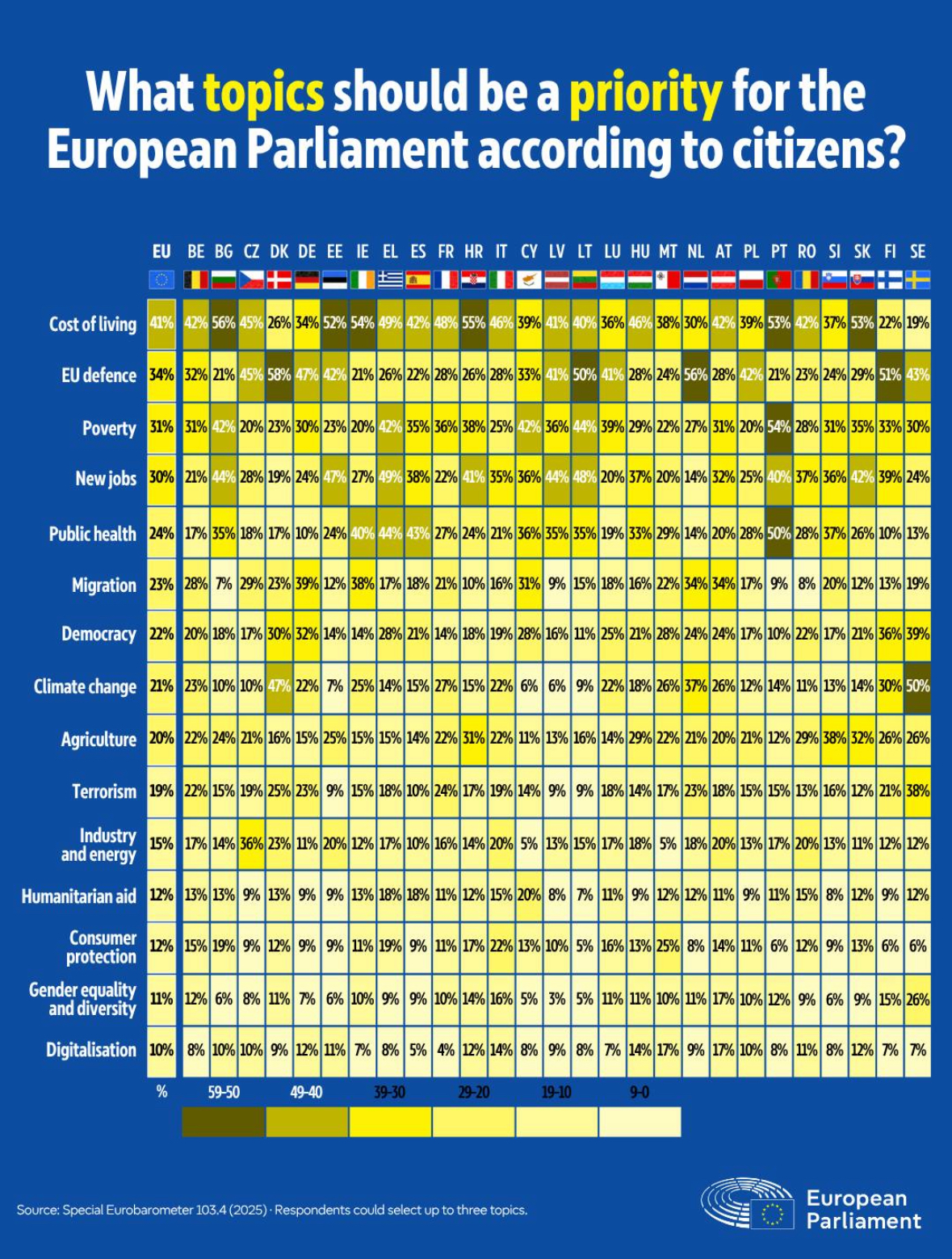
Special Eurobarometer 103.4 (2025) Retrieved November 25, 2025 from https://www.instagram.com/europeanparliament/
Do Those Goals Align with the Mindsets of Europeans?
While the points proposed by the European Commission show some alignment with the point of view of an average European citizen, there are several topics which are not as emphasized by the European institutions. Eurobarometer suggests a strong alignment between the European policy and responses of Eurobarometer 103.4 survey in the three areas of : Security and Defense, Migration and Prosperity, jobs and competitiveness.
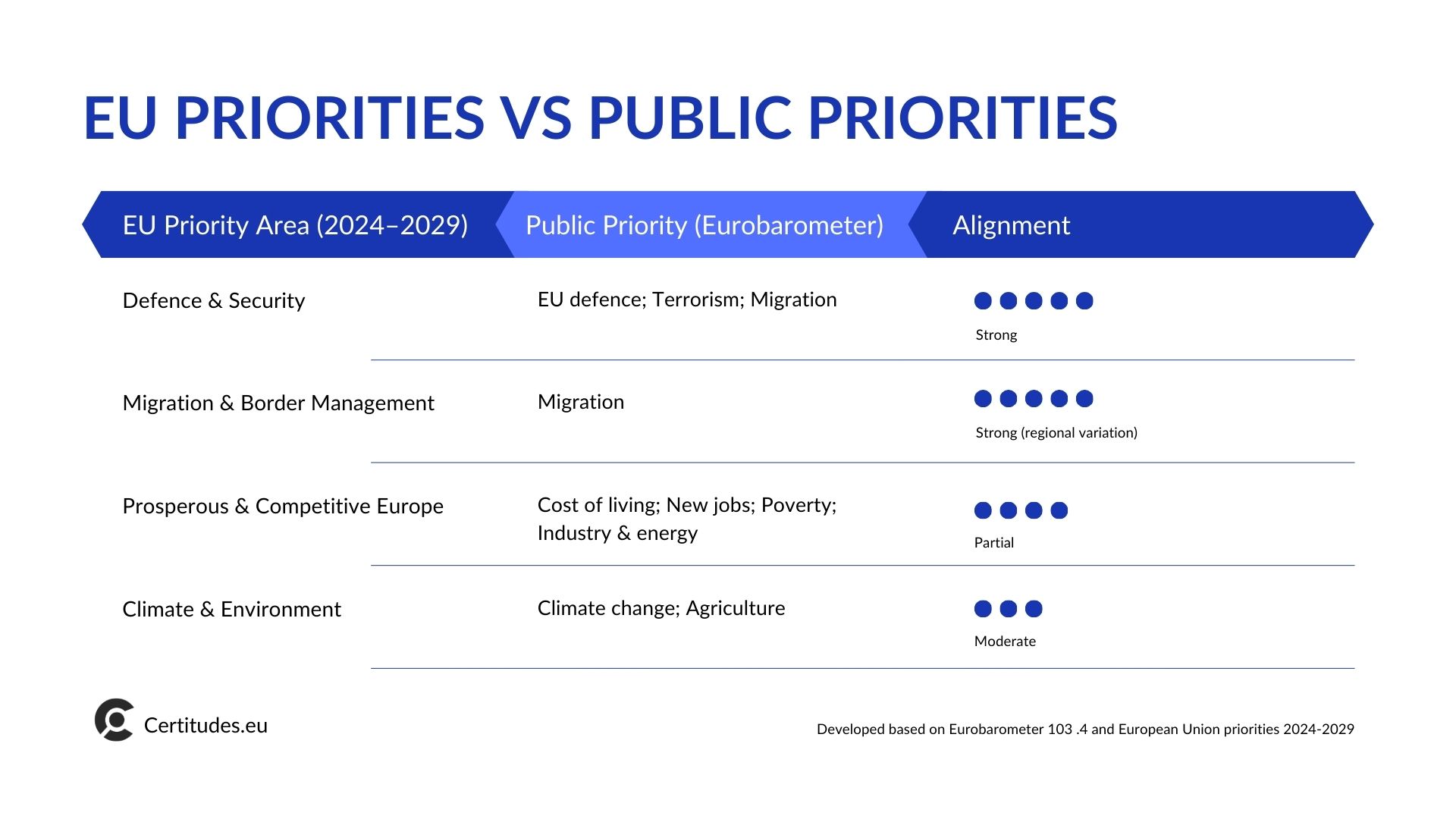
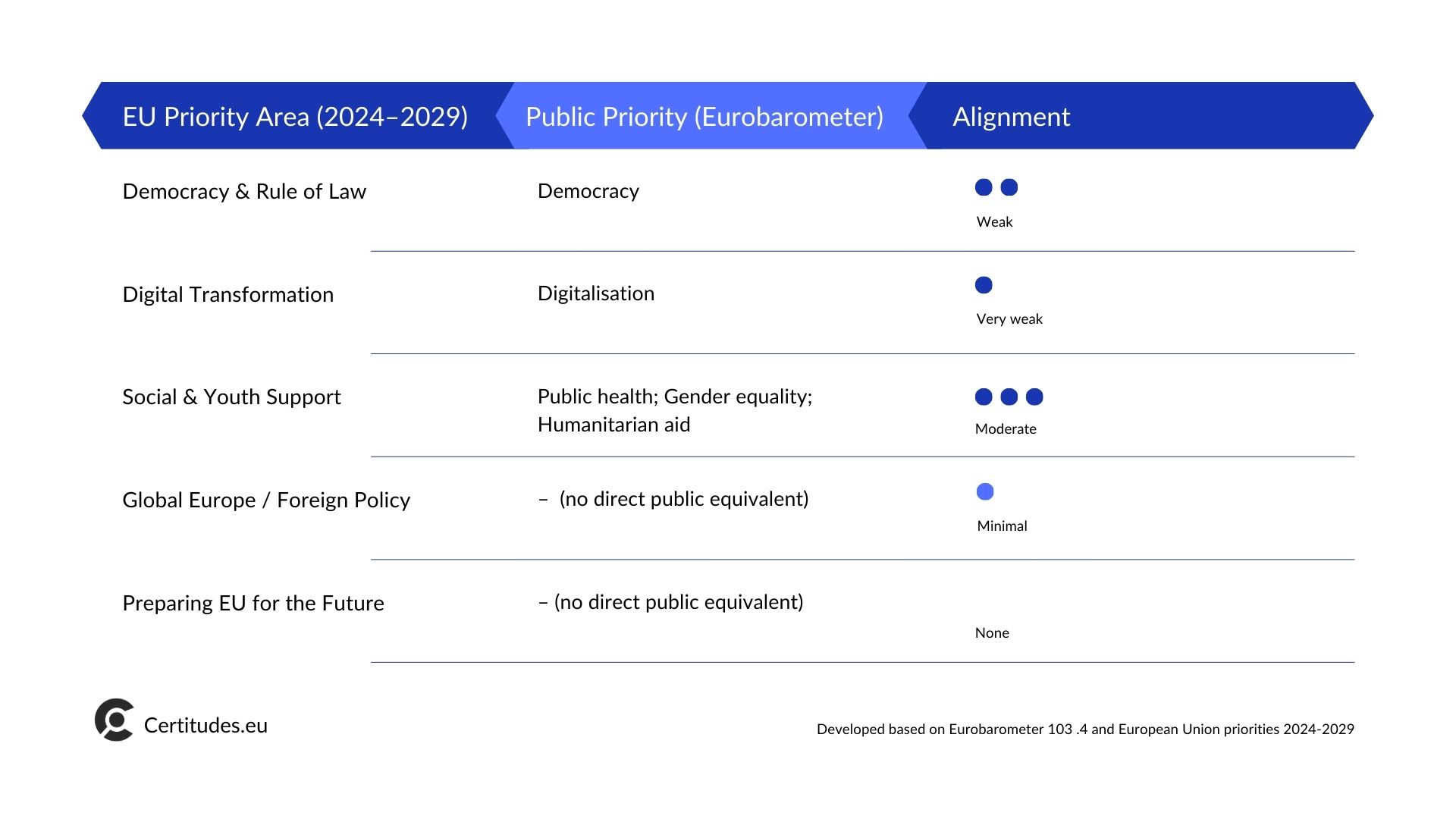
The instability of recent years disturbed the perceived safety among Europeans. Russia’s war, fears about U.S. commitment to NATO and cyberattacks are only some of the reasons why security became a burning issue of modern Europe. Citizens place EU defense as one of the top three priorities in nearly all countries (20–45% range). This aligns with the European commission ideas to build the European Defence Union, respond to crises, secure eastern borders and manage migration. Related to the previous issue, the problem of Migration has been another topic which was ranked medium to high priority among Europeans, receiving especially high scores in Austria, Germany, Netherlands, Denmark and Sweden. The problem is also addressed by the European agenda and this year, there were attempts to execute it through relocation – the New Pact on Migration and Asylum (2024). Several countries including Bulgaria, Czechia, Estonia, Croatia, Austria, and Poland, however, did not support the proposed solutions.
Europeans also highlighted the strong interest in cost of living, new jobs, and poverty (30–60%), which may be a response to decreasing living standards in European countries and growing inflation rates. European institutions noticed that issue and according to the agenda, will attempt to address it through boosting economic growth, competitiveness and innovations. However, the EU focuses on structural, long-term economic capacity, which may cause short-term economic pain, such as inflation, housing, wages, noticed by the citizens.
The weakest alignment between the interest of the citizens and European policy is shown in the topic of democracy and rule of law and digitalization. While strengthening democracy is the main direction suggested by European deputies, citizens’ responses reflect lack of specific interest in this area, which may suggest a lack of particular threat to European democracy. Citizens appear more concerned about day-to-day life and issues such as increasing prices and tight job market rather than institutional or constitutional questions. The same problem regards digitalization, which is high on the European agenda but not considered as fundamental by the citizens – scoring only 5–12% in most countries.
Which countries may be most satisfied with the new European Agenda?
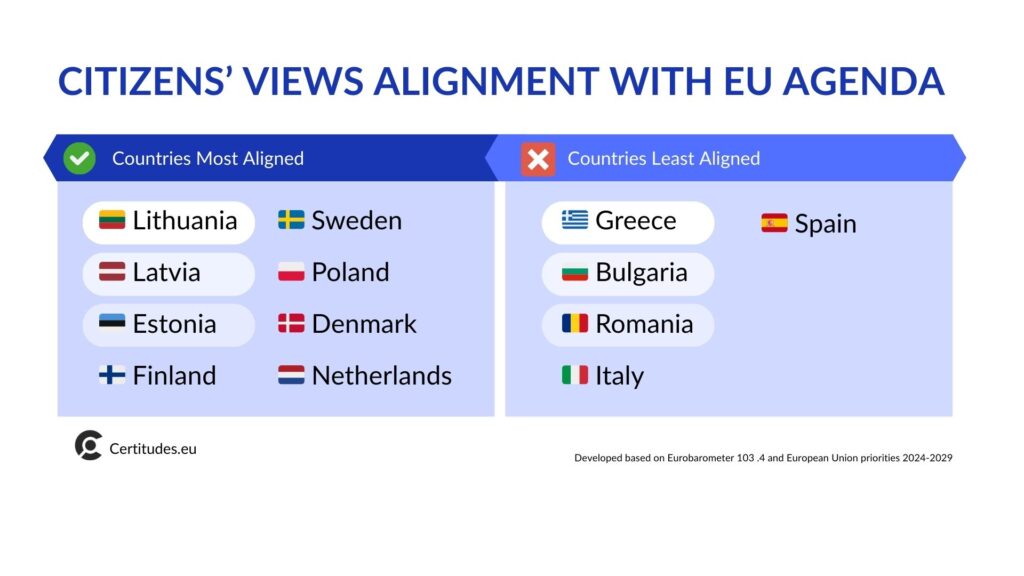
The countries, in which citizens opinion best aligns with the new European agenda are those, where defence, migration, security and democracy are simultaneously considered important. Those priorities were selected mainly in Eastern and Central European countries, where noticeable is higher social fear related to Russia-Ukraine conflict. Therefore, the most satisfied with the agenda may be the citizens of the Balkans, countries such as Latvia, Lithuania and Estonia, who prioritize defense (40–50%), security, cost of living and democracy. The next beneficiary of the new European Agenda is Poland, where the highest priorities were defense, migration, democracy. Followed by Finland and Sweden with high scores for green policy as a priority.
The lowest alignment is presented in countries, where poverty and cost of living are selected for priority rather than safety issues, while EU priorities do not heavily focus on inflation. The most misaligned country is Greece, where cost of living was the main priority with a striking score above 50%. Following countries which may not fully benefit from the new agenda are Bulgaria and Romania with key priorities of high cost of living and poverty. The European Commission’s competitiveness and security agenda does not directly address their main problems.
References & Sources
European Union. (n.d.). European Union priorities 2024–2029. Retrieved November 25, 2025, from https://european-union.europa.eu/priorities-and-actions/eu-priorities/european-union-priorities-2024-2029_en
Special Eurobarometer 103.4 (2025) Retrieved November 25, 2025 from https://www.instagram.com/europeanparliament/